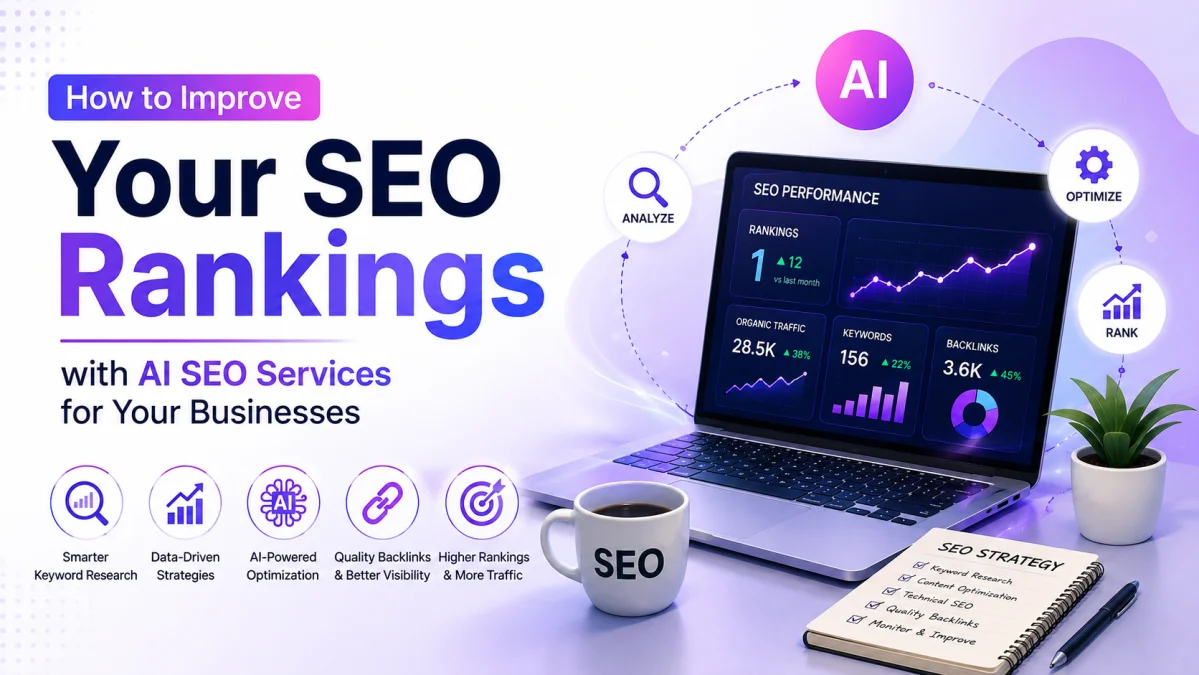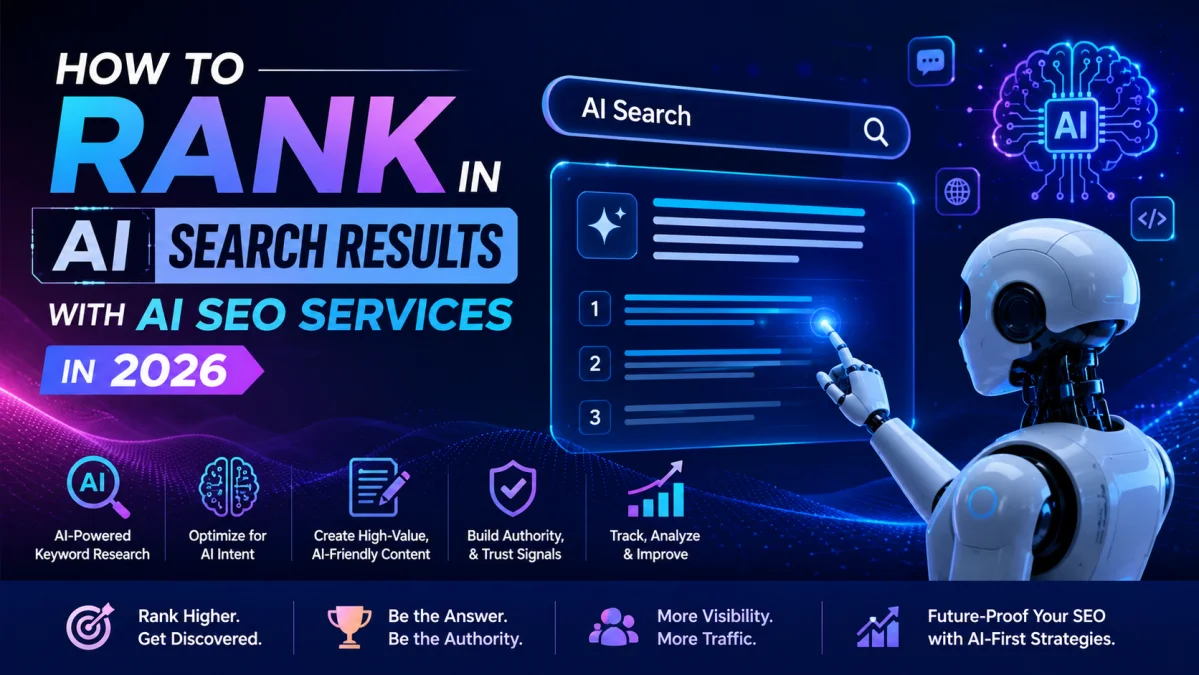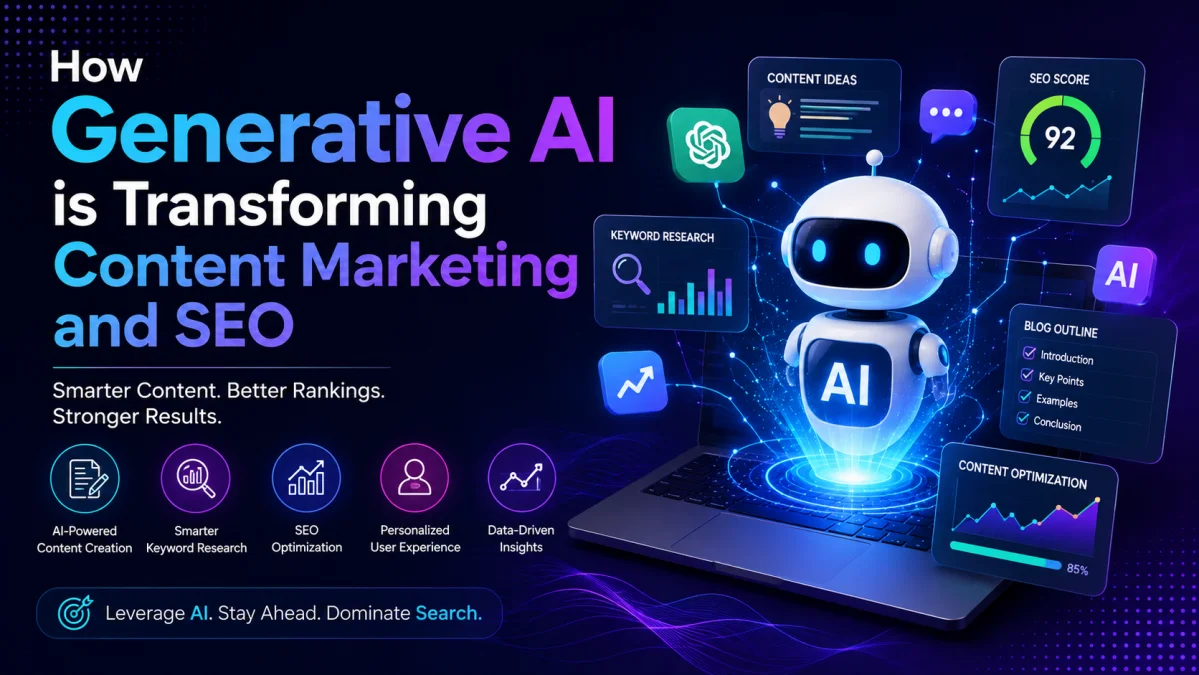
Every eighteen months or so, someone publishes a confident declaration that SEO is dead. The culprit changes: first it was social media, then paid advertising, then voice search, and now, with considerably more conviction than previous attempts, artificial intelligence.
The argument goes like this: AI Overviews are answering questions directly on the results page, so nobody clicks through to websites anymore. ChatGPT and Perplexity are replacing Google for a growing share of searches. Traditional ranking signals are becoming irrelevant as AI systems develop their own criteria for what to surface. Therefore, investing in SEO for long-term growth is optimizing for a model that is actively becoming obsolete.
Here is the thing. The argument is not entirely wrong, and it is not right enough to act on. What is actually happening to search is more interesting and more strategically useful than a binary story about SEO dying or surviving. SEO and AI are adapting to each other.
What the Research Actually Says
A study analyzing 25,000 searches found that pages ranking number one on Google appeared in AI search answers 25% of the time. Let that sit for a moment. The pages earning top traditional rankings are appearing in AI-generated answers at a meaningful and measurable rate, indicating that the signals that determine traditional SEO performance correlate with those that determine AI citation.
The same research found that higher Google rankings increase the probability of appearing in AI results. Not replace. Increase. The two systems are not operating independently with separate criteria; they are converging around similar quality signals: authority, relevance, freshness, structure, and credibility.
This is the nuance that the "SEO is dead" argument consistently misses. SEO is no longer just about earning blue links on a results page. It is about earning the kind of authority and credibility that makes a source citation-worthy to AI systems, trusted by Google's AI Overview, referenced by ChatGPT, and surfaced by Perplexity when relevant questions arise.
Businesses that optimize purely for traditional ranking are leaving value on the table. The businesses abandoning SEO entirely because AI is changing search are walking away from the foundation that AI visibility is increasingly built on.
SEO vs Paid Advertising
For CMOs evaluating where to allocate marketing budgets in an environment of rising paid advertising costs and evolving search behavior, the structural economics of organic traffic deserve serious attention.
Paid traffic stops the moment the budget stops. There is no residual, no accumulation, no asset left behind when a campaign ends. The economics are linear: the more spending produces more traffic, less spending produces less traffic, and the relationship is immediate in both directions.
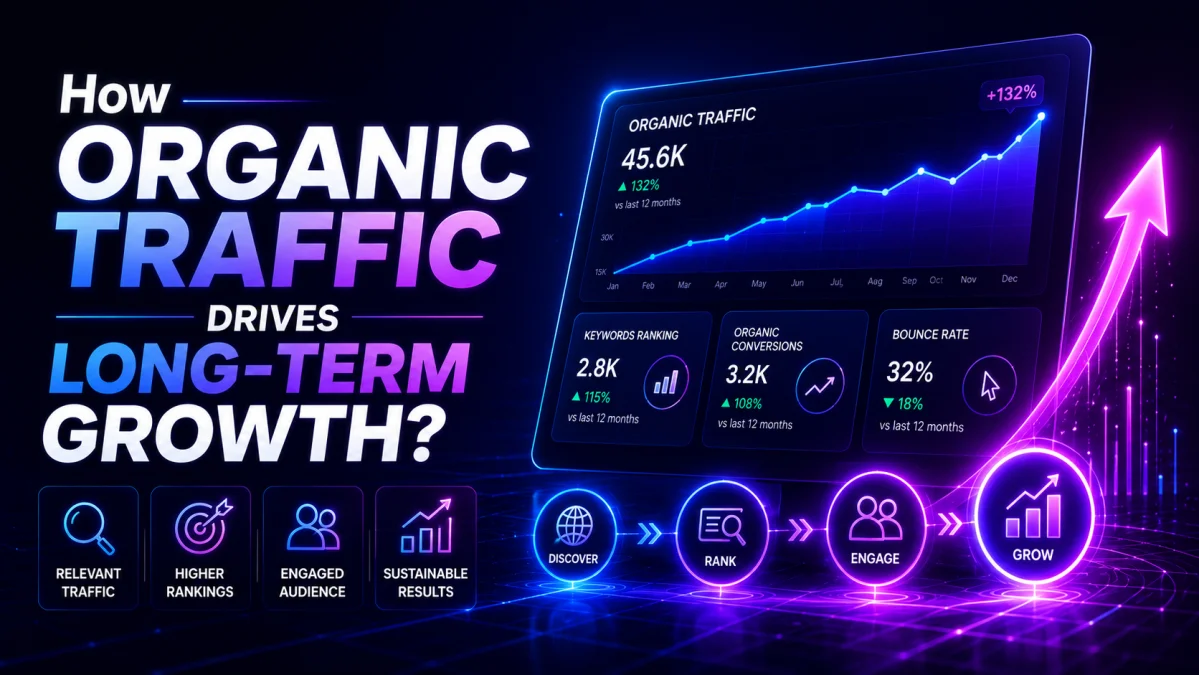
Among SEO services, organic traffic compounds with SEO. A piece of content that ranks well and earns authority today generates traffic next month, next quarter, and potentially next year without incremental spend to maintain it. Every link earned, every mention in an authoritative source, every additional piece of content that reinforces topical authority increases the value of everything already built and proves the organic traffic strategy right. The relationship between investment and output is not linear. It compounds over time, which changes the return calculation significantly when measured over a two- or three-year horizon.
This compounding dynamic is why the businesses that invested seriously in SEO three years ago are now operating with a structural advantage in organic visibility that competitors cannot replicate quickly by simply increasing budget. The advantage accumulated over time cannot be purchased in a single quarter, which makes it more durable than almost any paid media position.
Search Engine Optimization Benefits with AI
The honest assessment of what AI search does to SEO is not elimination; it is evolution. Some search behaviors are changing in ways that reduce click-through rates from traditional results. Informational queries that AI can answer completely on the results page do produce fewer clicks to the underlying sources. This is real, and the traffic impact in information-heavy content categories is measurable.
LLMs fetch solutions or answers from sources that they find credible. These are usually well-structured, recently crafted content, and pages that are citation-worthy.
AI Overviews, ChatGPT, Perplexity, and Gemini are increasingly part of the distribution ecosystem for content that earns genuine authority. A page cited in a Google AI Overview is getting a visibility placement above traditional organic results, which is not a diminished form of SEO visibility. It is an elevated one, delivered through a different mechanism to the same audience.
What Content Authority Looks Like in 2026
The authority, freshness, and structure that both traditional SEO and AI search favor are not abstract qualities. They translate into specific, practical content decisions.
Authority means building comprehensive, accurate coverage of a wide range of topics that is relevant, too. Basically, a body of content that establishes genuine expertise across the full depth of what your target audience needs to understand.
Freshness in content indicates two things: one is that the content is written and published recently, and secondly, the content is written in a way that lets you have your opinion, with a new perspective. For an SEO Service strategy, structure means organizing content so that search engines and AI systems can efficiently understand what a page covers, what questions it answers, and how it relates to other content on the site. Clear headings, subheadings, direct answers to specific questions, schema markup that communicates content relationships explicitly, and internal linking that maps topical connections. These structural elements make content more accessible to both algorithmic and AI evaluation.
SEO for Long-term Growth
For business owners and CMOs thinking about where to invest marketing resources over a multi-year horizon, the organic traffic argument comes down to a straightforward comparison.
Channels that require continuous spend to maintain visibility produce traffic that is rented. The moment the spend pauses, the visibility pauses. These channels are valuable; they deliver results faster, they test messaging efficiently, and they can be scaled quickly when conditions warrant. But they are rented visibility, not owned.
Organic SEO strategy from well-executed SEO is owned visibility. The businesses that treat SEO as a long-term investment rather than a short-term tactic tend to look at their organic traffic curves three years in and recognize something that purely paid-traffic businesses cannot produce: a baseline of qualified visitors that exists below the waterline regardless of what happens to the advertising budget.
What This Means Practically
The practical implication for marketing leaders is not to choose between SEO and AI search optimization as if they are competing strategies. They are converging; the evidence says they are rewarding similar inputs, and treating them as a single integrated effort is more accurate to how they actually function.