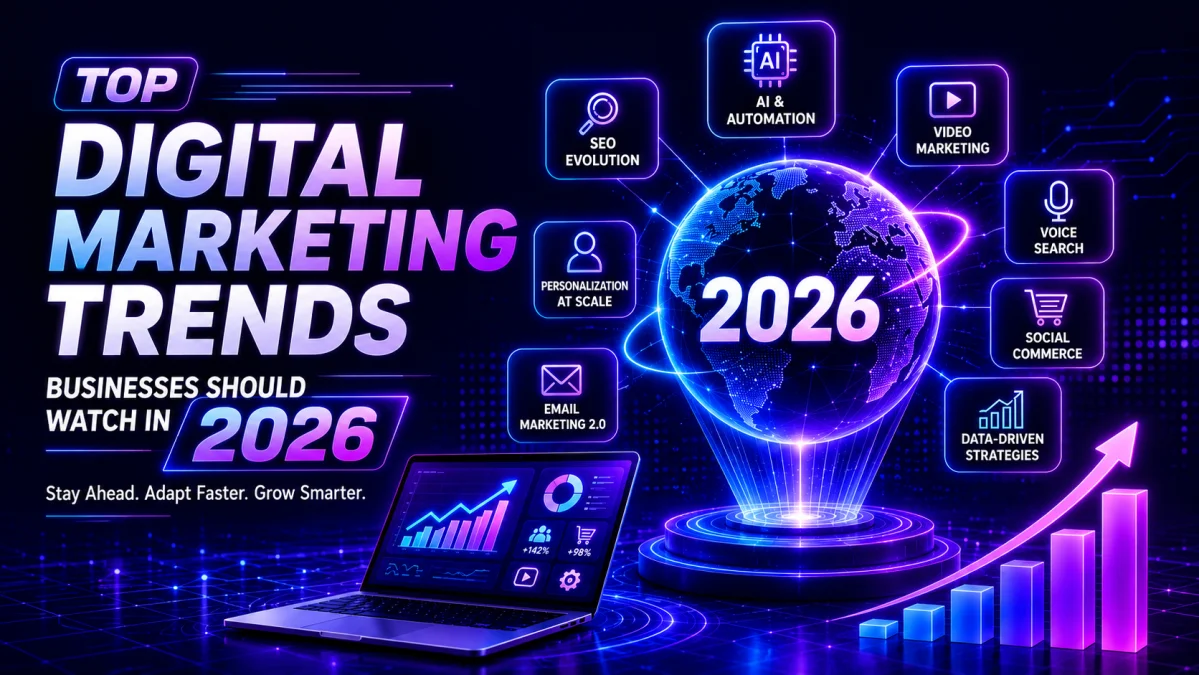
Let's be honest about something most marketing trend articles skip over. Most of them do not require your immediate attention. If there are 10 running trends, 4 are likely to help your business. Platform features come and go. Tactical fads cycle through about every eighteen months. The things genuinely worth a CMO's attention are the structural shifts; the ones that change the underlying economics of how marketing works, not just which format happens to be performing well this quarter.
A bit too much AI, a bit too many tools scrutinizing what message you publish on the internet. Digital marketing trends 2026 have a few of those shifts happening simultaneously, which makes this particular moment worth paying more attention to. The businesses that read this and adjust accordingly will be in a materially different position twelve months from now than those that file it under "interesting but not urgent."
AI Has Moved Past the Conversation Stage
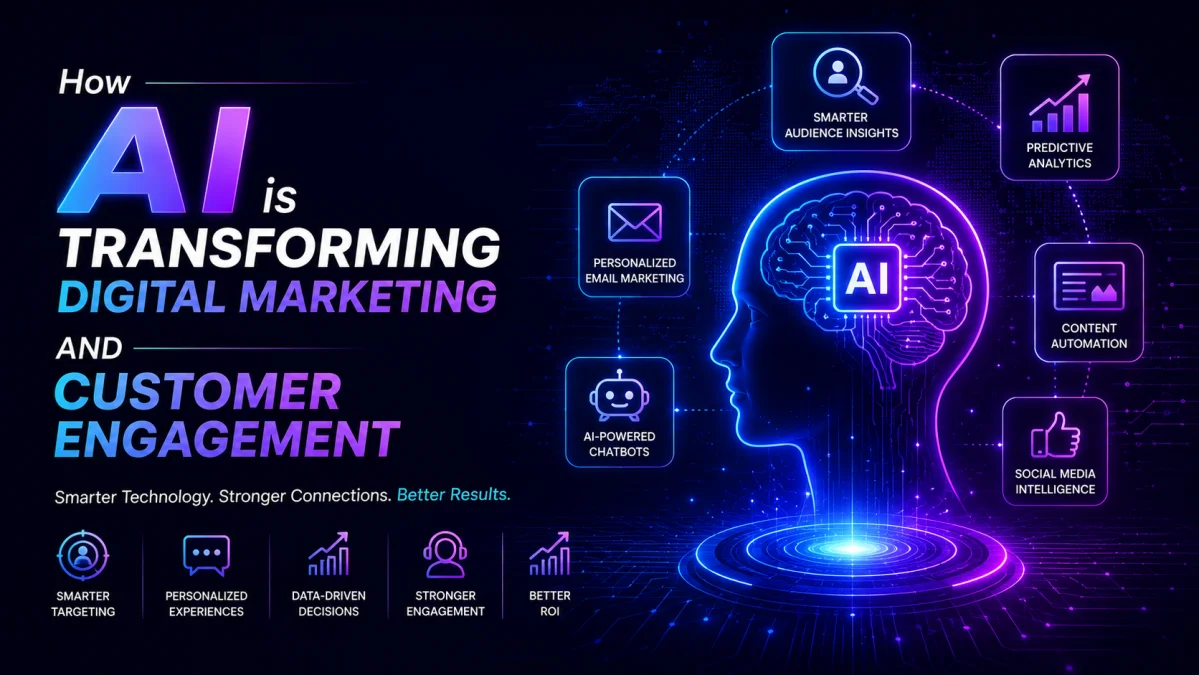
Considering digital marketing trends 2026, AI in marketing in this era should be an operational reality. According to HubSpot's 2025 report, 92% of marketers say AI has already impacted their role. Not will; already has.
By 2026, 80% of advanced creative professionals are expected to use generative AI as a standard part of their workflow without hesitation. Though that is less likely to replace the human workforce, as creativity requires humans at the core.
Owing to AI, generic content in a larger volume has become less valuable. AI easily helps with the mechanical production layers, while human talent can focus on strategy, voice, and the creative judgment that AI cannot replicate. The thing is, content written entirely by a human would have their opinions or perspective, while AI is usually going to pass the information without any edge, unless prompted in a specific way.
Short-Form Video Is Still Leading, But the Bar Keeps Rising
21% of marketers say short-form video delivers the highest ROI of any content format. TikTok, YouTube Shorts, and Instagram Reels are not slowing down, and the platforms are actively amplifying this content format over others in their discovery algorithms. All generations today consume short-form content through social media. Online digital marketing strategies 2026 are really witnessing a massive transformation. The depth of a concept might be taking a few hits amid such online marketing strategies in 2026.
What has changed is the competitive environment within the format. Standing out in today’s tight digital marketing services space requires more than showing up; if you provide content that is actually helpful and resonates with your viewers, then you’ve got it.
For eg, if a healthcare provider puts a video that states how to maintain baseline health after 30, and conveys to drink more water, not to take stress, and have 7 hours of sleep, it's way too generic to be consumed by the masses. You need to mention methods of reducing stress and how stress impacts the body. You need to help your audience enhance their sleep and maintain water intake with actual solutions and convey the depth of he problem.
The businesses producing polished promotional videos in short-form format are getting scrolled past. The ones treating short-form as a genuine communication channel, not just a repurposed ad, are building the kind of following that compounds into the pipeline.
UGC and Community Are Not Optional Anymore for Online Marketing Strategies 2026
According to the latest digital marketing updates, over 80% of consumers say reviews and testimonials by users or customers improve their trust in a brand, their ability to discover it, and their overall experience of it. 82% say they are more likely to purchase from a brand with an engaging online community. 70% of marketers identify community building as a primary driver of customer retention.
Community infrastructure and UGC amplification are gaining traction these days, alongside brand-produced content, not instead of it. Brands making this shift are seeing retention and referral outcomes that justify the investment consistently. Those still spending the majority of their creative budget on polished campaigns with no community element are working harder for diminishing returns.
SEO Is Being Restructured Whether You Are Ready or Not
Gartner projects a 50% decrease in organic search traffic by 2028. That number generated a lot of anxiety when it was published, and appropriate context helps: organic search traffic is declining, not because people are searching less, but because AI-generated answers are resolving more queries directly on the results page without requiring a click through to any website.
Google AI Overviews, ChatGPT search, and Perplexity are fundamentally changing what a successful search result looks like. Position one on a page of blue links is becoming less valuable in categories where AI synthesizes the answer above those links. Being cited as the source AI systems draw from is becoming the new objective, especially for small businesses amid marketing trends.
This requires content with genuine topical depth, structured specifically to answer the questions your audience is asking, with authority signals that reflect consistent credibility, not just on-page optimization. The brands already building toward this standard are positioning for the search environment arriving in the next twenty-four months. Those still optimizing exclusively for traditional ranking are optimizing for a model that is actively changing beneath them.
The 91% of marketers who report SEO had a positive impact on website performance are correct.
Personalization Gap in Digital Marketing Trends 2026: Everyone Wants It, Few Are Delivering It
96% of marketers say personalization leads to increased sales. Here is where the gap becomes uncomfortable: only 39% routinely personalize website experiences, and only 31% personalize offers based on actual purchase behavior.
First-Party Data Is Now a Strategic Asset, Not an IT Consideration
As third-party tracking has deteriorated through browser policy changes, regulatory pressure, and platform restrictions, the dependence on third-party data has widened considerably.
The advantage compounds over time. Every data relationship improves targeting accuracy, which improves campaign performance, which generates more qualified data. The brands that started this work early are accelerating ahead. The brands starting now are still building toward where the early movers already are.
Chatbots Have Finally Crossed the Usefulness Threshold
The chatbot market is projected to grow at a 23.3% compound annual growth rate from 2025 through 2030. That growth reflects a genuine capability improvement. Current conversational AI tools can handle lead qualification, appointment booking, product recommendations, and common decision-stage questions in real time without frustration.
For businesses with high inquiry volume and limited sales team bandwidth, well-built conversational marketing tools are a substantive pipeline infrastructure. The critical requirement is that the conversation is built around what the customer actually needs at that moment in their journey, not what is convenient for the brand to automate.
78% of B2B marketers used case studies and customer stories in the past twelve months, and 53% reported them as highly effective. Conversational marketing that surfaces the right case study at the right moment is one of the more efficient lead-nurturing mechanisms available because it meets the buyer's specific question rather than pushing them through a sequence designed around the average prospect.
Digital marketing trends 2026: the Crux
The thread running through every trend above is that they reinforce each other. AI enables personalization at scale. Personalization requires first-party data. First-party data gets built through community, content, and value exchange. Content gets discovered through search and social. Conversational tools convert discovery into a qualified pipeline. Short-form video builds the initial trust that makes every subsequent step easier.
The businesses growing fastest are not leading on any single one of these trends. They are building systems where each element supports the others with consistent messaging, connected data, and a customer experience that feels intentional rather than assembled from whatever the team decided to prioritize in different quarters.