Digital marketing is becoming the fulcrum of many organizational activities. Businesses recognize this and want to make the most of it, but there are many challenges. The channel list keeps expanding, the algorithms keep changing, and the possibilities for where to invest time and money are just staggering.
So things get patched together. Someone handles social. Someone else runs ads. The website gets updated when someone has bandwidth. And then leadership looks at the quarterly numbers and wonders why none of it is gaining traction.
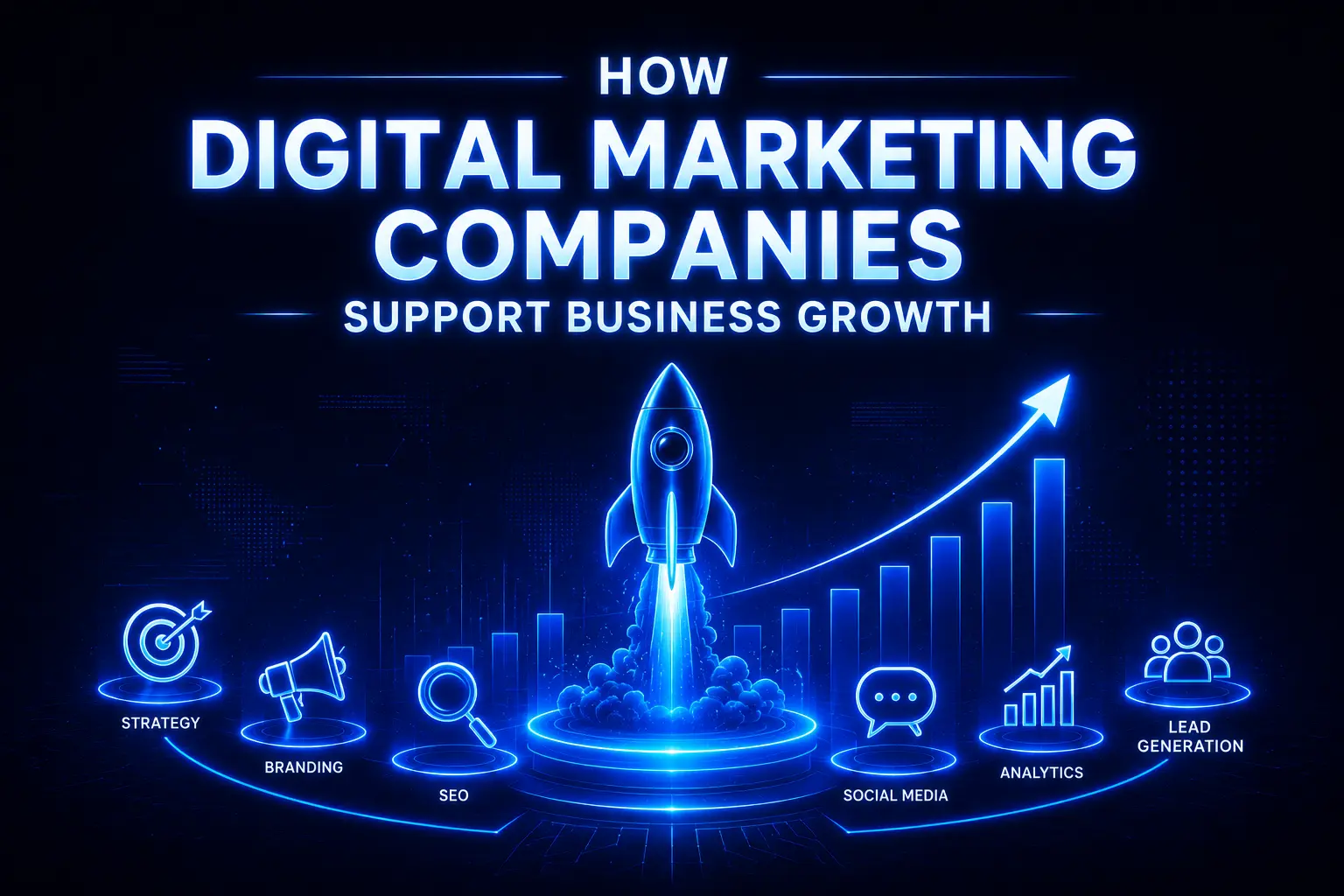
This is not a resource problem in most cases. It is a coordination problem. Digital marketing produces results when the channels work together. When the SEO strategy informs content, content supports paid campaigns, paid campaigns feed retargeting, and all of it is measured against the same business outcomes. A good digital marketing company builds that coordination. An internal team stretched across six responsibilities rarely can. What follows is an honest look at where that coordination actually matters.
SEO: The Long Game That Compounds Over Time
Nobody wakes up excited about technical SEO. It is detailed, slow-moving work, and the results take longer to show up than most stakeholders are comfortable with. That’s why so many businesses deprioritize it, and the ones that don't end up with a meaningful competitive advantage. Search engine optimization services today are a different discipline from what they were four or five years ago. Google's ability to evaluate page quality has become genuinely sophisticated. It can assess whether content answers a question in depth or merely uses the right words. It counts whether users interact with a page or quickly exit. It considers their performance on mobile devices, visual stability, and page load speed. The shortcuts that once helped have stopped working; this is not a short-term circumstance.
A professional SEO company in USA worth hiring is doing several things simultaneously that most internal teams simply don't have the capacity for. They conduct technical audits to point out crawl errors, redirects, duplicate content, and Core Web Vitals issues before these problems creep up silently and impact performance. Since the aim is to rank for searches where customers are prepared to take action, they develop content strategies based on search intent. They seek link acquisition through editorial contacts, unique research, and content that other websites really want to link to, thereby establishing enduring authority.
What the best SEO company in USA understands, and what most businesses discover too late, is how tightly these elements depend on each other:
- A technically broken site means content never gets properly indexed, regardless of how good it is
- Content without topical breadth limits how much authority a site can build in any given subject area
- Links without supporting content depth hit a ceiling quickly and stop moving in rankings
- Local signals, including business profile completeness, citation consistency, and review patterns, determine geographic visibility independently of everything else the site does
This is how SEO programs slow down, fixing one while forgetting the others. That dependency is why this project calls for persistent, coordinated administration rather than sporadic sprints.
Paid Advertising: Expensive When Unclear, Good When Targeted
The cost of internet advertising has soared over the last several years on all platforms, and this trend is not expected to reverse. It implies that the acceptability of inaccurate campaigns, such as hazy goals, poor creative, and careless tracking, has almost vanished.The businesses getting strong returns from paid media in 2026 are those treating measurement as the foundation rather than an afterthought. The important questions are the unglamorous ones before the initial campaign heats up.
They include double-counting, under-counting, or assigning conversions to the incorrect sessions.
- Is the conversion tracking configured correctly, or is it double-counting?
- Is first-party data being used to target audiences with less third-party tracking?
- Is the attribution model capturing how consumers truly buy, or is it giving credit to whatever they last clicked?
Digital marketing services that handle these concerns head-on create campaigns that can be really improved. Once the measurement is done, the digital marketing strategies become clearer. For most businesses in growth mode, the paid channel mix in 2026 tends to look something like this:
- Google Search for capturing existing demand from people actively researching what the business offers
- Performance Max for broader Google inventory reach, driven by conversion data rather than manual targeting
- Meta for reaching new audiences through first-party customer lookalikes and interest-based signals
- Retargeting sequences for visitors who showed clear intent but left without converting
- YouTube is where good video creative shines because recall and attention rates on the platform typically run noticeably higher than those on regular display formats.
- Good, well-planned post-launch management distinguishes between initiatives that develop and those that remain unchanged.
One should systematically test creativity against itself. Budget distribution must change in line with what is really converted. Performance data should be viewed objectively rather than from the perspective of validating what the team wishes to see. Almost always, paid media that runs automatically after the first month falls short of its potential.
Social Media Shapes Opinions About Brand, Regardless Of the Engagement
Businesses that treat social channels as optional, or as a convenient place to republish content from elsewhere, are not neutral in the eyes of their audience. A passive or half-hearted social presence suggests the brand is not particularly interested, that no one is paying attention to the store, and that perhaps it may not be trusted. Today, social media is a credibility platform. Users do not see it as a broadcast medium. Before purchasing on the website, they check the product and reviews on these platforms.
They read comment sections before they fill out a contact form. They make judgments about whether a brand is worth their attention based on what they find, or fail to find, on platforms the business may not even be actively monitoring.
Good social media optimization services come from a real awareness of how very different these channels really are. What works on Instagram does not transfer to YouTube or TikTok; what does on LinkedIn has almost nothing in common with what earns reach on Instagram. Running a one-size-fits-all content calendar, a social media optimization firm generates continually mediocre content across all platforms, so yielding a low return on the production expenditure.
The best SMO services in USA extend well beyond managing a posting schedule:
- Social listening tracks brand mentions, rival activities, and pertinent industry discussions, and really uses that knowledge in strategy and content choices.
- Community management that treats every direct message and remark as a relationship touchpoint that merits a thoughtful reply.
- Creator and influencer partnerships are structured around genuine audience alignment rather than follower counts that may not reflect real engagement.
- Performance measurements are tied to outcomes that move the business: traffic, leads generated, and revenue influenced, rather than reach and impression metrics that look good in a slide deck.
It should also be noted that, especially for younger consumers, social media sites today serve as important search tools. Before anyone pulls up a browser and searches Google, a significant amount of product discovery occurs on YouTube, Instagram, and TikTok. Brands that don't account for social search in their optimization strategy are invisible to a growing segment of the market.
Content: The Underlying Asset That Most Businesses Undervalue
Pull apart any strong digital marketing program, and content turns out to be load-bearing in almost every channel. SEO rankings are determined by content depth and relevance. The paid ad conversions depend on the quality of the landing page copy. The social engagement lives or dies on what gets published. Email open rates reflect whether the content in those emails is worth reading. Content is not one channel among many; it is what makes the other channels function.
The businesses that understand this treat content as a long-term investment rather than a recurring production expense. They are not enquiring about this week's posts. They are inquiring which subjects have genuine, long-lasting search interest, which questions their audience is actively asking that rivals have not adequately answered, and which content formats their customers actually interact with throughout the buying process. An experienced internet marketing company answers those questions with research before a single brief gets written.
What that research produces is content with a specific purpose rather than content that fills space.
- Articles built to rank for commercial queries.
- Landing pages are developed in response to real consumer concerns.
- Videos that gain reach on sites where text-only posts are algorithmically deprioritized.
- Case studies written to carry weight in a real sales conversation rather than to satisfy a content calendar.
Video is especially important, since the gap between what it has become worth and what many companies charge for it is still rather large. Videos are seen, distributed, and recalled by viewers. Search results turn it up. It rules social feeds on all the main channels. A content program that ignores video is against most people's preferred way of consuming information today, and that conflict shows up in performance data regardless of any accurate attribution.
Measurement: Where Serious Programs Separate From Mediocre Ones
Something that happens more often than it should: every channel team reports solid numbers, and revenue stays flat. The paid team points to strong ROAS figures. The SEO team shows keyword growth. The social team presents healthy engagement rates. And nobody can explain convincingly why the pipeline is not responding. The individual metrics are technically accurate and simultaneously misleading.
The core issue is that channels do not operate in isolation, even when they are measured as though they do. A buyer rarely encounters a brand once and converts cleanly through a single touchpoint. More commonly, they come across a social post, think nothing of it, search a relevant keyword a few days later, get retargeted on a different platform, and eventually convert through a branded search.
When attribution credits that conversion entirely to branded search, the team managing top-funnel social and awareness activity eventually loses budget, and the pipeline that depended on that activity quietly dries up as a result. A credible digital marketing company in USA builds attribution models that reflect how customers actually behave rather than how the reporting makes the agency look. Combined with properly structured GA4 event tracking, clearly defined conversion goals, and reporting dashboards that show what leadership needs in order to make real decisions, this measurement layer becomes one of the most genuinely valuable things a long-term agency relationship produces.
Over time, it accumulates knowledge about what specifically works for this business, this audience, and this market, and that knowledge makes every subsequent investment more efficient than the one before it.
Conclusion
Rarely do companies that are making actual progress online differ from those that continue spending without obvious benefits, based just on ability or money. It concerns whether, in light of the company's results, the marketing effort is coordinated across channels and regularly enhanced based on data.
Search, paid media, social, and content are not independent bets placed separately. They are connected parts of a single system, and they perform at categorically different levels when managed as such. Agencies that operate as genuine business partners are the ones that make that system deliver. Businesses investing in that kind of partnership now will be significantly harder to compete with in three years, and that trajectory does not happen by accident.
With hands-on expertise across expert SEO services, social media optimization, paid media, and content strategy, Fusion Logic is a full-service digital marketing firm in the United States. Their staff can pinpoint exactly where the problems lie and create solutions to address them if your current curriculum is not producing great outcomes.