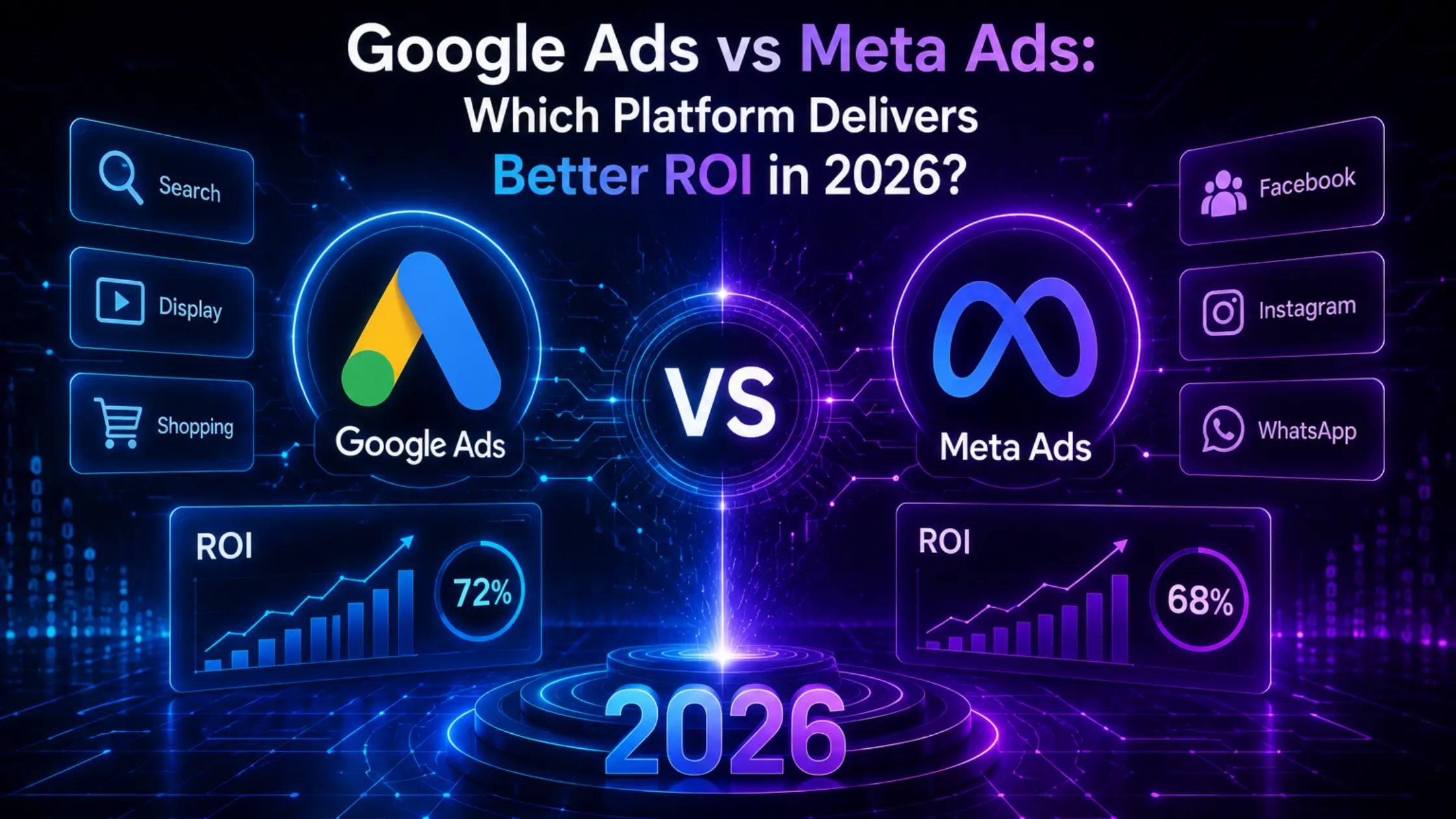
A B2B software company spent six months running both Google Ads and Meta Ads simultaneously, then sat down to compare performance. Google showed a cost per conversion of $180. Meta showed $95. The marketing manager recommended cutting Google and doubling down on Meta based on those numbers alone.
Three months later, pipeline quality had dropped noticeably. The cheaper Meta leads were converting to demos at half the rate of the Google leads. The cost per actual closed deal had actually increased after the switch, even though the cost per lead had gone down. This is the hidden trap that many businesses fall into when evaluating lead generation services, optimizing for the metric that looks best on a dashboard rather than the one that actually drives revenue. Happens when you spiral into the Facebook ads vs Google ads dilemma!
The problem was not the decision to use Meta. It was comparing two platforms using a metric that meant something different on each one. There cannot be one and only best advertising platform in 2026 if you want to keep the digital marketing funnel comprehensive.
Google ads reach the exact audience, as the ads show up when someone browses the same or related product/service. On the other hand, Meta ads may appear in any feed. While Google ads show up on Google search pages, YouTube, and so on, Meta ads show up on Facebook, Instagram, and WhatsApp Messenger. Meta ads ignite awareness, and Google ads almost take you to the conversion. Big difference!
How Each Platform Is Actually Built: Facebook ads vs Google ads
Google Ads runs across Search, YouTube, Gmail, the Google Display Network, Search partner sites, and video partner sites. The campaign types available, i.e., Search, Display, Performance Max, Shopping, and YouTube, serve different moments in the customer journey. The common thread running through all of them is that Google can reach people at the moment they're actively engaging with relevant content or queries.
Notably, Meta ad actually interrupts the scrolling activity rather than responding to an active intent signal. These ads need to be crafted with a bit of artistic sense, with intriguing content, and with an attractive factor.
Google puts your message in front of someone who is already thinking about something related to what you sell.
The Structural Differences That Change How You Manage Each Platform
These differences affect day-to-day campaign management in ways that create confusion if marketers try to apply the same logic to both platforms. Meta ads would require creativity and a bit of sparkle that can engage the audience, while Google ads can be straightforward instead of unnecessarily wordy.
Where budgets are set, in Google Ads, the budget is set at the campaign level. In Meta Ads, the budget is set at the ad set level, unless you're using Campaign Budget Optimization. This means the same budget management instinct cannot be applied to both platforms.
Budget:
Meta can spend up to 25% more than the daily budget on any given day, but won't exceed seven times the daily budget across a full week. Google Ads can spend up to 100% more than the daily budget on a single day, but stays within 30.4 times the daily budget across a month. This means a campaign that looks like it's "overspending" on a given day may still be within normal pacing. Understanding this difference prevents panicked budget changes that actually disrupt performance.
Objectives:
In Meta Ads, the campaign objective essentially determines the campaign type from the start. In Google Ads, choosing an objective is optional and primarily changes which campaign types appear as options, but choosing the wrong objective can unnecessarily limit what's available later. These are not minor interface differences. They shape the entire structure of how campaigns get built and how the algorithm optimizes delivery.
How creative works. Meta Ads creative typically involves a headline, description, primary text, and images or video, with performance heavily dependent on visual quality and message resonance. Amongst Facebook ads vs Google ads, Meta rewards strong creative testing and tends to concentrate spending on whichever variation wins quickly. Google Ads relies heavily on responsive ad formats, such as Responsive Search Ads with up to 15 headlines and 4 descriptions, where the platform tests combinations automatically over time. The creative strategy required for each is genuinely different.
Targeting: Where the Platforms Have Diverged
Both platforms have transformed a ton when it comes to targeting in recent years, and the differences now are worth understanding before assuming the same targeting approach transfers between them.
Google Ads removed similar audiences as a targeting option. The platform now leans more heavily into automation, optimized targeting, and broad match with smart bidding to find the right users based on conversion signals rather than audience lists the advertiser builds manually.
Meta still uses lookalike audiences, which remain one of its strongest prospecting tools. A well-seeded lookalike built from high-value customer data can reach new audiences with significantly better conversion rates than interest-based targeting alone. This prospecting capability is a meaningful structural advantage Meta holds for businesses trying to reach new customers who look like their existing ones. This generates leads in impressive volumes.
The practical implication is that businesses need a consistent measurement framework that accounts for how each platform counts results, not just a side-by-side comparison of numbers that aren't measuring the same thing.
ROI Depends on the Business, Not the Platform; Google Ads vs Meta Ads ROI
Going back to the B2B software company from the introduction, their Google leads were more expensive per lead but converted to closed deals at twice the rate of their Meta leads. The platform that looked worse by cost-per-lead metrics was actually delivering better business results.
This plays out differently depending on the service or product itself and the audience. A local service business with high-intent local search demand often finds Google Search Ads to be the highest-converting channel available, because its customers are already actively searching for exactly what they offer. However, a product-based firm coming up with apparel or new-age electronics would find its target audience through Meta easily.
The paid advertising comparison isn't really Google vs. Meta. It's what stage of the funnel needs support and which platform serves that stage better for the specific audience and offer. Google is generally stronger at capturing existing demand. Meta is generally stronger at creating demand that doesn't exist yet.
When Both Together Make More Sense Than Either Alone
The highest-performing paid media strategies in 2026 are rarely run on one platform exclusively. They're using Meta to build awareness and warm up audiences, then using Google to capture the demand that awareness generates.
The sequencing matters: someone who's seen a Meta ad from a brand and developed some initial familiarity is significantly more likely to engage with a Google Search Ad from that same brand later. The platforms compound each other's effectiveness when the strategy accounts for the full journey rather than treating each platform as a standalone campaign.
The reporting challenge with this approach is that single-platform attribution models will consistently undervalue whichever channel contributed earlier in the journey. Building a measurement approach that accounts for multi-touch influence rather than relying solely on the default attribution in each platform's dashboard is what allows businesses to make budget decisions based on actual business impact rather than dashboard metrics that each platform calculates in its own favor.